The journal
Chinese SUVs: models and comparison criteria for France
Chinese SUVs in France: Geely, Zeekr, BYD and XPENG, with a documentary comparison of powertrains, charging and dealer support.
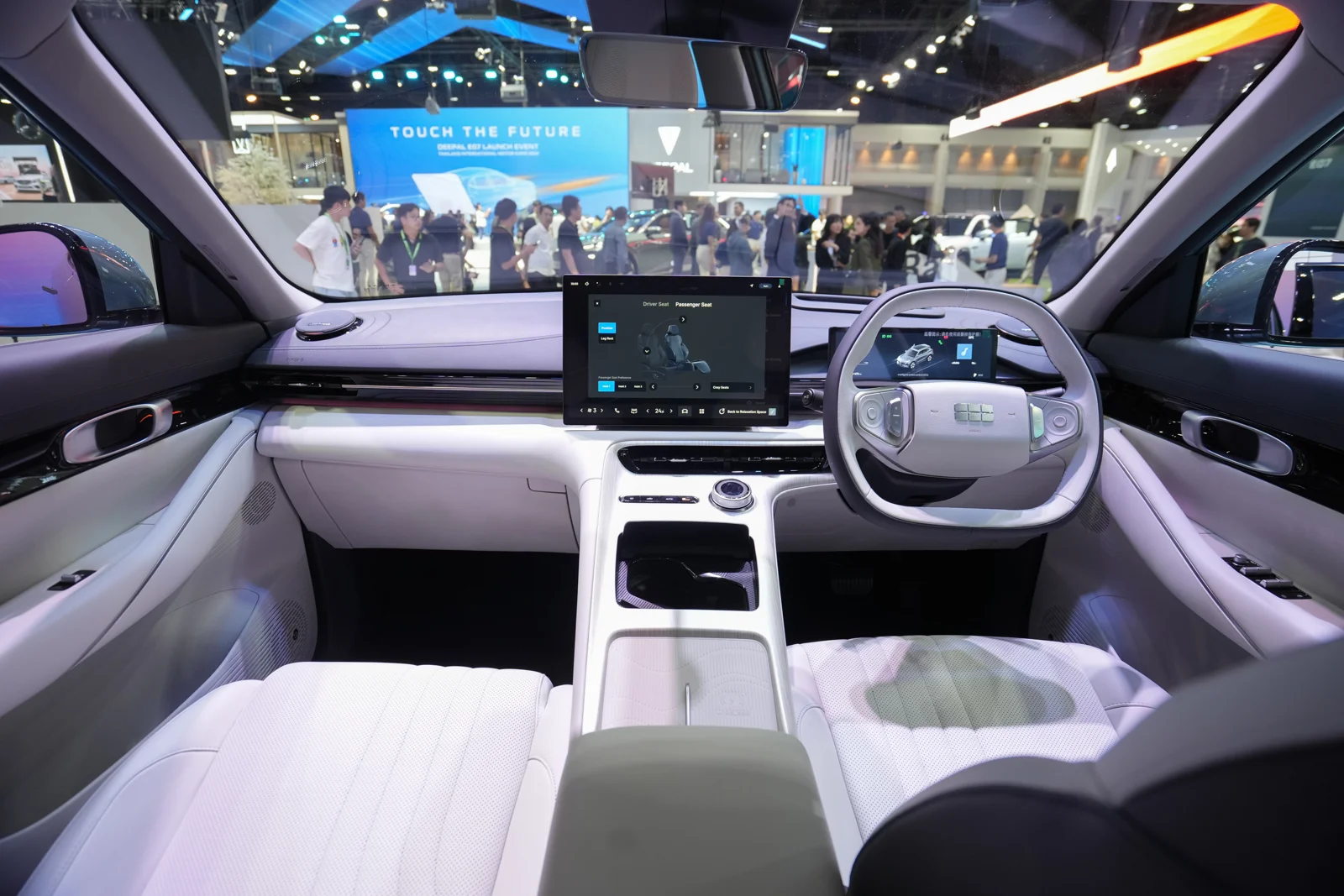
Chinese SUVs offered in France cover very different vehicles. Some are electric, others plug-in hybrids; their dimensions, prices and dealer networks meet different needs. A single ranking can hide the factors that matter in everyday use.
This overview uses French-market Geely, Zeekr, BYD and XPENG pages checked on 14 September 2026. It is a documentary comparison, not a road-test ranking or an invented reliability league table. Start with an appropriate size and powertrain, then compare the versions actually offered in France. Availability and specifications described here should not be treated as UK-market information.
What does Chinese SUV actually mean?
The expression may refer to a brand’s origin, its industrial group or the vehicle’s manufacturing location. These are different pieces of information. A brand can have design teams in several countries and manufacture different models at different factories.
For a French-market comparison, the practical question is the locally sold version. A global presentation may describe equipment absent from a French trim, another powertrain or a model that has not joined the network. Identify the specification’s intended market before comparing figures.
Brand nationality does not summarise the ownership experience either. Dimensions, ergonomics, consumption, charging, warranty and workshops need to be assessed vehicle by vehicle. One convincing model cannot establish that every car from the same country suits the same driver.
Six models illustrating the main differences
The selection below covers several positions documented on manufacturers’ French websites. It is neither an exhaustive catalogue nor a declaration of a winner. It shows why the SUV label contains quite different propositions.
| Model | Presented powertrain | Priority question |
|---|---|---|
| Geely E5 | Electric | Do charging and space meet family travel needs? |
| Geely Starray EM-i | Plug-in hybrid | Can the vehicle be charged regularly? |
| Zeekr X | Electric | Does the compact format suit parking and passengers? |
| Zeekr 7X | Electric | Do its size and charging fit longer journeys? |
| BYD Seal U DM-i | Plug-in hybrid | How will driving be split between electricity and petrol? |
| XPENG G6 | Electric | What charging performance applies to the proposed version? |
Geely E5 and Starray EM-i: compare the powertrains separately
These two Geely models illustrate a common choice in a family shortlist. The E5 runs on electricity; the Starray EM-i combines a combustion engine with external charging. Charging access, normal distances and the frequency of long trips should be established before comparing a trim or promotion.
Our Geely car price guide provides dated budget references. These are not total ownership costs: energy, insurance and services depend on the driver’s circumstances.
Zeekr X and 7X: size changes the comparison
The X and 7X share a brand but not the same footprint. A family comparison should consider passenger and boot space, while urban use also requires a garage and manoeuvring check. Our Zeekr guide explains the range and version differences.
BYD Seal U DM-i and XPENG G6: two further approaches
The Seal U DM-i broadens a plug-in hybrid shortlist. The G6 belongs in an electric SUV comparison. Placing them in the same price table without explaining their powertrains loses useful information. They need to be assessed using consistent driving assumptions.
Electric or plug-in hybrid: begin with available charging
An electric car requires a charging plan. Start with regular access to a solution compatible with normal journeys: home, work or public infrastructure. Energy prices, time parked and any necessary detours form part of the real experience.
Access to charging also matters for a plug-in hybrid. It combines two energy sources, but the usefulness of its electric mode depends on actual operation. A rarely charged car will not reproduce the circumstances of a driver who plugs in every evening and makes short journeys.
A method, rather than a universal answer
Map a representative week: daily distance, a few unusual journeys, parking locations and charging opportunities. Then consider a week without home charging or a holiday trip. The aim is to understand constraints before settling on a powertrain.
This avoids two shortcuts: assuming that an electric car suits everyone, or that a plug-in hybrid requires no planning. Needs can change from year to year, so a possible move or new commute is worth including in the assessment.
Range and charging: compare like with like
Electric range, combined range and consumption with a charged battery are not the same measurement. A plug-in hybrid can advertise a long combined distance because it also has a fuel tank. That figure should not be compared directly with another model’s battery-only range.
For electric cars, retain the same measurement standard and version. Battery capacity, wheels and driven axles can change the result. A WLTP figure helps standardised comparison but does not guarantee a particular journey distance. Speed, temperature, terrain and load remain important.
Charging has three parts: what the vehicle accepts, what the charger can deliver and the time across a specified battery interval. Peak power alone is insufficient because the vehicle may not sustain it throughout a session.
A manufacturer’s table may quote the fastest charge on one version and the longest range on another. Combining those maxima into an imaginary ideal specification would be misleading. The quotation and exact version’s specification should support the numbers being used.
Space and equipment: checks to make inside the vehicle
External dimensions provide an initial limit. Measure parking space with mirrors, doors and the open tailgate in mind. A space can be long enough yet remain difficult to use because it is narrow or bordered by a wall.
Inside, seat the usual passengers. Knee room, headroom, child-seat mounting access and middle-seat comfort cannot be inferred from screen size. For the boot, trying the objects normally carried often reveals more than a small difference in litres.
Equipment should be examined for the chosen trim. Presentation photographs may show a higher specification. Establish what is standard, optional or unavailable. Connected features may also depend on activation or service conditions.
Finally, spend time stationary locating common controls: ventilation, demisting, navigation, volume and charging settings. Ergonomics concern how easily routine tasks are completed, not just how impressive the dashboard looks.
Reliability, warranty and networks: avoid shortcuts
Reliability requires evidence over time for identified vehicles. A long warranty is a contractual commitment, not proof that failures cannot occur. Likewise, a strong safety-test result does not measure mechanical or software reliability.
For a recent arrival in France, distinguish overseas experience from local evidence. Use, versions and after-sales arrangements may differ. A handful of accounts cannot establish a representative failure rate.
Networks offer more immediately verifiable information: workshop addresses, model support, assistance procedures and parts contacts. Our Geely dealer guide demonstrates the checks using a concrete network, including Como around Paris.
An overseas-market vehicle needs further attention. The Geely Coolray illustrates the issue: a foreign-currency result or an import advertisement is not evidence of official French distribution.
Building a short, comparable shortlist
First exclude formats incompatible with parking or passenger requirements. Next select one or two realistic powertrain types based on charging access. Budget, necessary equipment and workshop proximity can then narrow the choice to exact versions.
| Stage | Information to retain |
|---|---|
| Format | Dimensions, access, occupied seats and loading |
| Powertrain | Charging access and journey pattern |
| Version | Battery, equipment and trim-specific features |
| Budget | Dated price, fees, insurance and energy assumptions |
| Support | Workshop, applicable warranty and assistance |
| Test drive | Similar route and checks for each candidate |
Compare the remaining cars on similar journeys. Recording observations immediately after each test helps separate a memorable sales presentation from the actual driving experience. A useful choice meets the identified needs with understood compromises, rather than collecting the highest numbers in a brochure.
Frequently asked questions
Which Chinese SUV is best?
There is no answer for every use. Size, charging access, passengers and budget lead to different shortlists. This guide provides comparison criteria rather than presenting a documentary overview as a road test.
Which Chinese SUVs are presented in France?
The French pages checked include Geely E5, Geely Starray EM-i, Zeekr X, Zeekr 7X, BYD Seal U DM-i and XPENG G6. The selection is not exhaustive. Versions and delivery times require French-market confirmation.
Does a long warranty prove reliability?
No. It defines a conditional support commitment. Reliability requires evidence over time. Warranty terms, safety tests and ownership reports answer different questions.
Should an electric or plug-in hybrid SUV be chosen?
The choice depends partly on journeys and available charging. A plug-in hybrid also requires consideration of how often it will be plugged in. Comparing the two needs consistent usage assumptions and an individual calculation.
Sources
- Geely E5 France (14/09/2026)
- Geely Starray EM-i France (14/09/2026)
- Zeekr X France (14/09/2026)
- Zeekr 7X France (14/09/2026)
- BYD Seal U DM-i France (14/09/2026)
- XPENG, SUV et marché français (14/09/2026)