
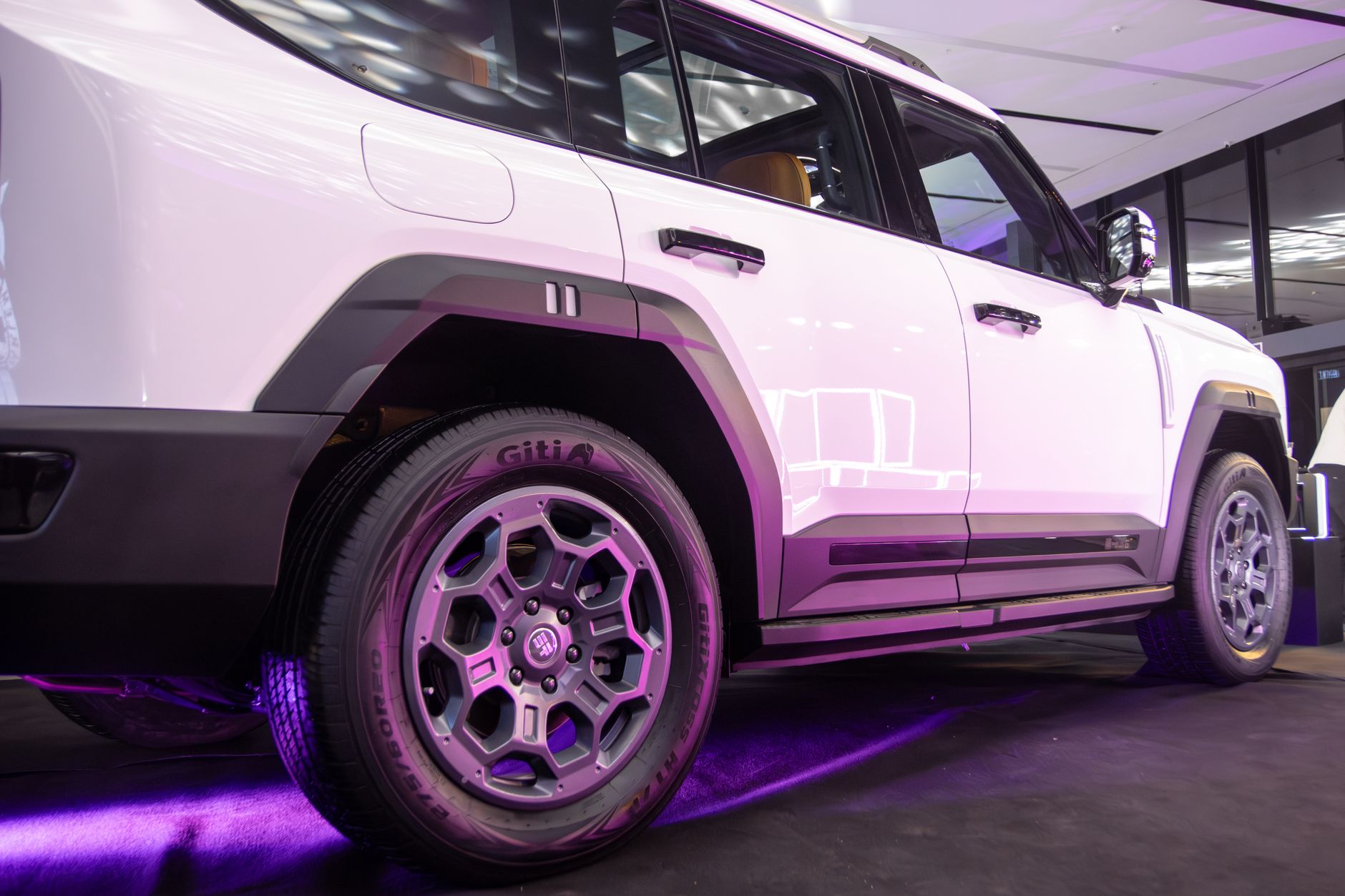
Choosing between Zeekr or Tesla first means comparing two different industrial organisations, before even comparing two specific models. Both brands sell electric vehicles in France, but their history, their dealer network and their distribution model do not automatically overlap. This report gathers factual benchmarks to frame the comparison correctly, without claiming to reproduce a test drive carried out by the editorial team.
Zeekr or Tesla: which benchmarks to compare before choosing?
The figures below, reviewed on 3 November 2026, cover the entry-level versions actually configurable in France at the time of review. They give an order of magnitude, not a quote: listed prices and ranges change with sales campaigns and range updates.
| Benchmark reviewed | Zeekr | Tesla |
|---|---|---|
| Range offered in France | X, 7X, 7GT, 001 | Model 3, Model Y |
| Starting price reviewed | 37,990 € (X, Core RWD) | 36,990 € (Model 3, Propulsion) |
| WLTP range (lineup) | from 330 km (X Core) to over 600 km depending on version | from 455 km (Model Y Propulsion) to 657 km (Model Y Standard Long Range) |
| Industrial group | Geely | Tesla, Inc. |
| French sales network | recently established multi-brand dealers | centres and Mobile Service of its own |
These figures correspond to entry-level trims: they do not include options, fees or the commercial conditions in force at the time of a quote. WLTP range describes a measurement protocol, not a promise of actual road range.
Zeekr and Tesla: two different industrial organisations
Zeekr belongs to the industrial world of the Geely group, which brings together several distinct car brands, each keeping its own range, its own prices and its own dealer network. The site’s report on who owns Zeekr details how this group structure carries the brand, separately from the other marques in the same group.
Tesla follows a different path: the American manufacturer designs, assembles and distributes its vehicles under an integrated organisation, without a multi-brand dealer network, with a charging network and onboard software of its own. This vertical integration explains why comparing the two brands is as much about the chosen model as about the surrounding ecosystem: software updates and a proprietary charging network on the Tesla side, a dealer network and manufacturer warranties on the Zeekr side.
This distinction matters for the rest of the comparison: a Zeekr and a Tesla of similar size can differ more through their commercial ecosystem than through specifications alone.
Performance and powertrain: which motor for each model?
Both brands offer rear-wheel-drive architectures and all-wheel-drive versions depending on the model. The Zeekr X comes in Core RWD, Long Range RWD and Privilege AWD trims, with outputs and charging times that vary noticeably from one version to another: the French spec sheet for the X lists, for instance, 13 minutes from 10 to 80% for one version against 16 minutes for another, at a comparable battery size according to the source reviewed.
On the Tesla side, the Model 3 and Model Y come in Propulsion, Long Range and Performance versions, the latter geared towards driving enjoyment rather than range alone. As with Zeekr, the model name alone is not enough to infer the exact output: only the specific version’s spec sheet, with its review date, allows a useful comparison.
In both cases, the output stated in horsepower or kilowatts only tells part of the story: the vehicle’s weight, the electronic management of traction and the type of tyres also noticeably affect road behaviour, a point a spec sheet alone cannot settle.
Range, consumption and charging: how to read the figures
Range belongs to a version, not to a brand name. The benchmarks reviewed place the Zeekr X between 330 and 415 km WLTP depending on version, and some versions of the Zeekr 7GT range beyond 600 km WLTP combined. On the Tesla side, the guide reviewed lists a Model Y Propulsion at 455 km WLTP, a Standard Long Range at 657 km, presented as the 2026 lineup’s new addition, and a Performance closer to 560 km.
These gaps only compare usefully when keeping the same measurement standard and the same usage context: speed, temperature, terrain and heater use affect real-world consumption far more than a few kilometres’ difference shown in a brochure. A usual journey and the option to charge at home therefore matter more than a single catalogue figure.
For charging, the maximum power in kW only gives a partial picture: the battery range covered and the time stated for that range also matter. Tesla relies on its own Supercharger network, a genuine ecosystem advantage, while a Zeekr depends on the public charging network open to every brand, whose availability varies by region.
Dimensions and interior space: which use for which model
The choice between the two brands also depends on the size sought. The Zeekr X, a compact crossover, suits urban and suburban use, while the 7X and the 7GT target more family-oriented use, with more interior space and a larger boot. The Model 3 remains a compact saloon, and the Model Y a family SUV: the most relevant comparison therefore sets the Model Y against the 7X or the 7GT rather than the X.
A large boot stated in litres does not on its own say anything about the width between wheel arches or how easily a child seat fits: these points are best checked by trying the vehicle with the usual passengers and equipment, rather than by comparing spec-sheet figures alone.
Roof height and headroom deserve the same attention: a low-slung silhouette, such as the Zeekr 001 or the Model 3, favours aerodynamics and range, while a taller body, such as the 7X or the Model Y, makes it easier to get in and out and to load bulky items. The choice between these two approaches depends above all on the intended daily use, with neither silhouette being inherently better than the other.
Which network and which use to choose between Zeekr and Tesla?
The after-sales network deserves checking before any price comparison. Tesla relies on its own centres and an integrated mobile service, a centralised setup that simplifies tracking a case for the customer. Zeekr relies in France on already-established multi-brand dealers: the report on the Zeekr dealer network in France details this network and the method for checking an accreditation before booking a test drive.
For a buyer who favours a software ecosystem and a proven proprietary charging network, Tesla meets that need with its Model 3 and Model Y. For a buyer looking for a wider choice of body styles, from compact crossover to large electric estate, the Zeekr range, and more broadly that of the Geely group, deserves a version-by-version comparison. Our Chinese SUV panorama and our Geely or BYD comparison offer further benchmarks on the other brands present on this same segment.
In every case, the method stays the same: identify the exact version on each side, compare written quotes covering equivalent configurations, check the exact warranty duration, and the proximity of a dealer able to handle servicing. A brand name does not replace this case-by-case check.